featured
A Dietitian’s Guide to Nutrition During Menopause
Nutrition during menopause doesn’t have to be complicated. A dietitian shares key nutrients, foods to eat more of, and what to be mindful of.

A Dietitian’s Guide to Nutrition During Menopause
Menopause is when a woman has gone exactly twelve months without a menstrual period. However, before this point, a woman’s hormones can fluctuate and menstrual cycles become less stable during a transitional stage called perimenopause. During this stage, there is a significant decline in several hormones, while others rise rapidly. The hormonal changes that occur during this time period can have an effect on almost every system in the body.
While there is no single diet that works for everyone, there are many foods that can support your body through these changes and help you feel your best during this stage of life. Let’s discuss the nutrition priorities to address during menopause, including what foods to eat more of and what foods to limit.
What Happens To Your Body Nutritionally During Menopause
Perimenopause is the period of time when a woman’s body is adjusting to the decrease in hormones such as estrogen, progesterone, and testosterone. This hormone decline has a role in many symptoms including bone density loss, changes in fat distribution, slower metabolism, muscle mass loss, and even changes in digestion.

The Best Nutrients for Menopause
You can support your body through these hormonal changes by seeking out various nutrients.
Protein intake, while important for all individuals wanting to adopt a healthy diet, is especially key for preserving muscle mass as we age1. Fiber can not only benefit digestion and gut microbiome makeup, but it also has a large role in blood sugar regulation and heart health2. Calcium and vitamin D can nurture bone health3, while magnesium can support sleep and mood4.
Beyond these nutrients, there are a select few ingredients that contain compounds that may be particularly beneficial for this stage of life.
- Maitake mushroom is rich in beta-glucans that help support immune function5.
- Diindolylmethane (DIM) is a naturally occurring compound found in cruciferous vegetables that helps support estrogen metabolism6.
- Red maca is rich in antioxidants that can support healthy aging7.
- Holy basil supports a healthy cortisol response, which can promote a sense of calm8.
Together, these nutrients can nourish your body through menopause.
Supporting Common Menopause Changes Through Food
What you eat can play a role in managing menopause symptoms.
For hot flashes, it’s best to limit caffeine, alcohol, and spicy foods, as some people find these to be triggers. Additionally, due to the excess of sweating that accompanies hot flashes, make sure that you are properly hydrating with lots of water throughout the day.
To address weight gain that often appears in this stage of life, be sure to eat fiber and protein at each meal. This can help support steadier energy levels throughout the day and keep your hunger at bay, helping you avoid overeating and snacking on empty calories.
If bloating and digestion are a concern, make sure to stay hydrated and eat enough fiber, around 25-38 grams per day. While increasing your daily fiber intake, do so slowly and gradually over time. By suddenly jumping from 0 grams of fiber to 30 grams of fiber per day, you will likely experience gastrointestinal distress.
To address mood swings or brain fog, aim to eat more balanced meals throughout the day. This will help to stabilize your blood sugar.

Building A Menopause-Friendly Plate
A menopause-friendly plate looks a lot like a general healthy plate:
- ½ plate: vegetables and/or fruit
- ¼ plate: lean protein
- ¼ plate: whole grains or starchy carbohydrates
- Add: healthy fats like olive oil, avocado, nuts, or seeds
One should prioritize whole foods and minimize consumption of processed foods. This is particularly important for women experiencing perimenopause because processed foods are typically very high in added sugars and these sugars can significantly affect your energy levels due to blood glucose fluctuations.
Instead, it’s recommended to consume one half of a plate of produce, either fruits or vegetables at each meal. The other half of the plate should contain lean protein and whole grains or starchy carbohydrates respectively. This can look like a vegetable egg scramble with berries and whole grain toast or grilled chicken with roasted brussels sprouts and sweet potato. The types of lean proteins, produce, and whole grains are up to you, but the allotted portion sizes are essential to create a nutritionally balanced meal.
Food to Approach with Caution
While we’ve described the types of foods to include on your plate, there are a few foods (and drinks) that one should be cautious of consuming. For one, alcohol has been shown to have a role in sleep disturbances and is potentially linked to hot flashes for some individuals. Along the same lines, caffeine can have a negative impact on the symptoms of hot flashes and can obviously interfere with sleep quality. One should also be wary of caffeine use if they are particularly prone to anxiety.
In terms of food, it’s best to evaluate the nutrition label of products for a few key nutrients. High sodium can not only adversely affect blood pressure, but it can also lead to bloating for some individuals. Added sugars, as discussed above, have the ability to cause spikes in blood glucose, which can accordingly produce fluctuations in energy levels.
Lastly, while weight management is a common concern during this period, it’s not advised to adopt a significantly low calorie diet. This is because during perimenopause, calories, especially in the form of protein, are key to avoiding bone density loss and muscle mass loss. Eating enough is very important during this stage.

When To Talk to a Professional
It’s important to note that if any of these symptoms are negatively affecting your quality of life, it’s best to seek out help from a licensed healthcare professional. Additionally, if you have any worries about your decreasing bone density, a provider can evaluate your individual risk by reviewing your labs and DEXA scans. Lastly, if you notice persistent fatigue, unexplained weight loss, or want to discover your hormone replacement therapy options, meet with your physician to discuss these concerns.
Key Takeaways
Nutrition during menopause does not need to be restrictive or complicated. The goal is to support your body through a changing season with consistent, nourishing habits.
Foods to Eat More Of
- Protein-rich foods
- Fiber-rich foods
- Calcium and vitamin D
- Magnesium-rich foods
- Colorful fruits and vegetables
- Plenty of water
Foods and Drinks to Be Mindful Of
- Alcohol
- Caffeine
- Added sugars
- High-sodium foods
- Highly processed foods
- Very low-calorie diets
The best menopause nutrition routine is one you can repeat consistently. Focus on balanced meals, enough protein and fiber, steady hydration, and small choices that help your body feel supported day to day.

Disclaimer: This blog contains promotional content about our products. The information provided is for educational purposes only and is not intended to diagnose, treat, cure, or prevent any disease. These statements have not been evaluated by the Food and Drug Administration. This content is not a substitute for medical advice. Always consult your healthcare provider before making changes to your wellness routine, especially if you are pregnant, nursing, taking medication, or have a medical condition.
References:
1. Coelho-Junior HJ, Calvani R, Azzolino D, et al. Protein Intake and Sarcopenia in Older Adults: A Systematic Review and Meta-Analysis. Int J Environ Res Public Health. 2022;19(14):8718. Published 2022 Jul 18. doi:10.3390/ijerph19148718
2. Alahmari LA. Dietary fiber influence on overall health, with an emphasis on CVD, diabetes, obesity, colon cancer, and inflammation. Front Nutr. 2024;11:1510564. Published 2024 Dec 13. doi:10.3389/fnut.2024.1510564
3. Voulgaridou G, Papadopoulou SK, Detopoulou P, et al. Vitamin D and Calcium in Osteoporosis, and the Role of Bone Turnover Markers: A Narrative Review of Recent Data from RCTs. Diseases. 2023;11(1):29. Published 2023 Feb 8. doi:10.3390/diseases11010029
4. He C, Wang B, Chen X, Xu J, Yang Y, Yuan M. The Mechanisms of Magnesium in Sleep Disorders. Nat Sci Sleep. 2025;17:2639-2656. Published 2025 Oct 15. doi:10.2147/NSS.S552646
5. Vetvicka V, Vetvickova J. Immune-enhancing effects of Maitake (Grifola frondosa) and Shiitake (Lentinula edodes) extracts. Ann Transl Med. 2014;2(2):14. doi:10.3978/j.issn.2305-5839.2014.01.05
6. Newman MS, Smeaton J. The impact of 3,3'-diindolylmethane on estradiol and estrogen metabolism in postmenopausal women using a transdermal estradiol patch. Menopause. 2025;32(7):630-639. Published 2025 Jul 1. doi:10.1097/GME.0000000000002542
7. Minich DM, Ross K, Frame J, Fahoum M, Warner W, Meissner HO. Not All Maca Is Created Equal: A Review of Colors, Nutrition, Phytochemicals, and Clinical Uses. Nutrients. 2024;16(4):530. Published 2024 Feb 14. doi:10.3390/nu16040530
8. Lopresti AL, Smith SJ, Metse AP, Drummond PD. A randomized, double-blind, placebo-controlled trial investigating the effects of an Ocimum tenuiflorum (Holy Basil) extract (Holixer™) on stress, mood, and sleep in adults experiencing stress. Front Nutr. 2022;9:965130. Published 2022 Sep 2. doi:10.3389/fnut.2022.965130

By Kristen Carli, MS, RD
Kristen Carli is the owner of Camelback Nutrition & Wellness, a private nutrition practice and consulting firm. She graduated from University of Arizona with a BA in psychology and then received a BS in dietetics from Arizona State University. After completion of the dietetic internship, she continued her education by receiving a MS in Human Nutrition from University of Western States. Having a passion for nutrition communication, she writes for many food and nutrition outlets as well as regularly develops recipes for food brands and media companies. Her nutrition expertise has been featured in InStyle, Bustle, Livestrong, The List, MyFitnessPal and many others. Additionally, Kristen is often featured via local TV segments sharing nutrition tips and tricks. She was selected to act as a Produce for Better Health Foundation Fruit and Vegetable Ambassador in Action, helping to promote the health benefits and importance of consuming fruits and vegetables, as well as a FoodMinds upwaRD winner for 2022, honoring up and coming media dietitians. You can find her reading, running, and exploring new restaurants with her husband and baby boy.
Brainstorm











Brainstorm
Select Quantity:
Choose Your Price:

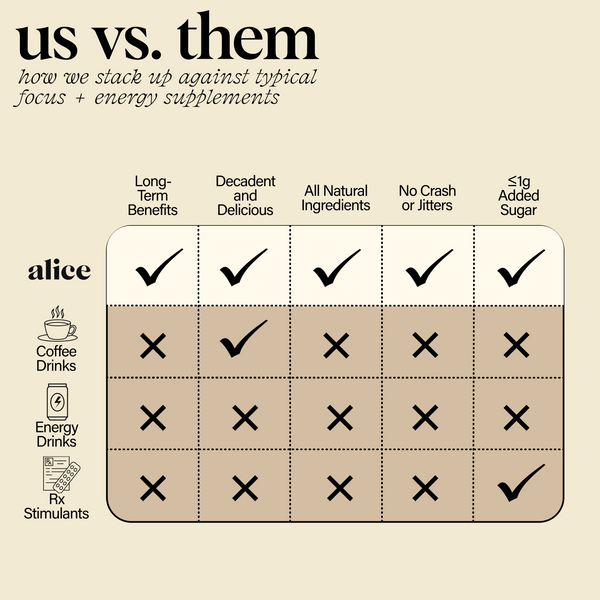
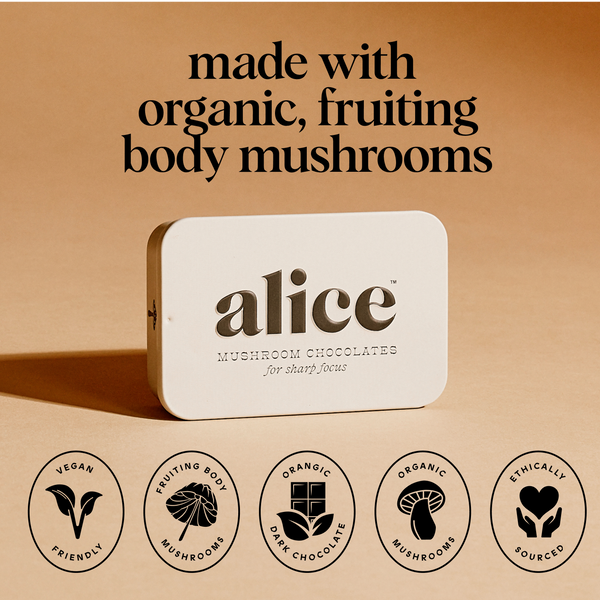
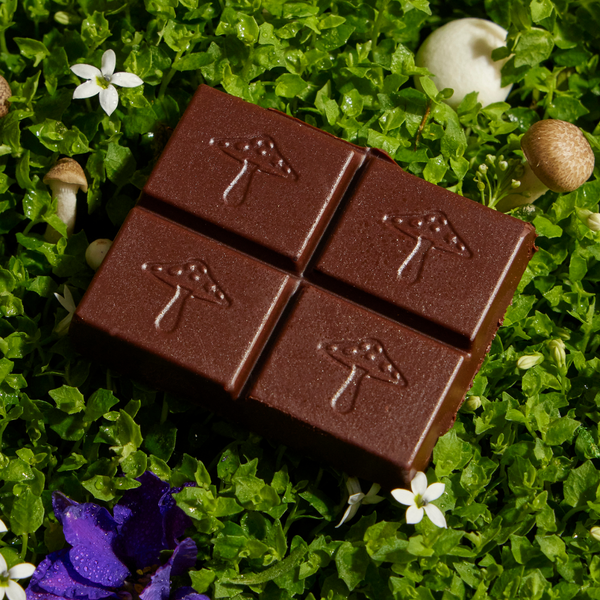
Brainstorm contains fairly traded organic dark chocolate, organic Lion’s Mane and organic Cordyceps from 100% fruiting body mushrooms, guarana and phosphatidylserine. Each square contains 66mg of natural caffeine which is equivalent to ⅔ cup of coffee.
Vegan, gluten-free, dairy-free, and OU-D kosher certified.
Other ingredients: organic semi-sweet 72% dark chocolate (organic unsweetened chocolate, organic cane sugar, organic cocoa butter), coconut oil, cocoa butter
Allergens: Coconut, Soy
Processed on shared equipment and may contain peanuts, tree nuts, milk, eggs, or soy.
Each bite of Brainstorm is formulated to boost cognitive function while also delivering an immediate boost to productivity and energy levels.
The long term benefits come from our functional mushrooms. Lion’s Mane and Cordyceps are felt over time — not instantly. When incorporated into a daily routine, the mushrooms’ nutrients compound in your body and become more effective (and noticeable) with sustained use.
Cordyceps works to boost blood oxygen levels to increase full body stamina, vitality, and energy. Lion’s Mane directly stimulates the nerve growth factor to improve memory, cognition, neuroplasticity, and brain health.
We also know that nothing beats instant gratification. That’s why we’ve added Guarana and Phosphaditylserine to our formula. Guarana is a caffeinated Brazilian berry that provides a smooth flow of energy, and Phosphaditylserine is a fatty acid that improves alertness, reaction time, thinking speed, and productivity throughout the day. Each square contains 66mg of natural caffeine which is equivalent to ⅔ cup of coffee.
The result: an indulgent daily routine that’s good for you and only gets better with time.
What to expect:
- In 30 minutes, feel productive and energized
- In 30 days, notice daily flow states, sustained energy and mental clarity
- After 3 months, enjoy memory support, brain health, and daily energy
One square suits most.
Enjoy one dose of Brainstorm when you’re in need of a clean boost of energy. Those looking for a stronger, more prolonged sensation may enjoy a double dose.
With daily use, Brainstorm supports neural connections in your brain for better productivity over time.
We exclusively use organic, fruiting body Lion’s Mane and Cordyceps mushrooms that are hand-harvested when their medicinal compounds are at peak concentration. Our mushrooms are dried in the sun to soak up Vitamin D before undergoing a pure, starch-free extraction process.
All ingredients are third-party lab tested for safety and stability, and mushrooms are third-party lab tested for potency.
