featured
The Stress Paradox:
Why Your Stress Response
is Ghosting Your Sex Life
When stress runs high, pleasure can feel farther away. Discover why stress shifts priorities and how adaptogens may support calm and connection.

The Cortisol Paradox
In the modern landscape of high-performance living, we have become experts at “optimizing our lives.” We have our 6:00 AM non-negotiable Pilates class, a meticulously curated skincare routine, and our calendars synced to the minute. Yet many of us are living with a quiet, and frustrating contradiction: we are more successful and hotter than ever, but our sexual desire has gone strangely quiet.
It isn’t just a lack of being in love, and it isn’t “just getting older.” It’s a biological negotiation. When we talk libido, we often look to our head or our heart, but one of the key gatekeepers to desire is a small, walnut-shaped set of glands atop your kidneys. Welcome to the era of the Stress Paradox where the very drive that makes us crush a presentation at work is the same mechanism that is ghosting us in the bedroom.¹
Why the Brain Chooses Stress Over Sex
To understand why your mojo has gone missing, we have to look at the HPA Axis (the Hypothamic-Pituitary-Adrenal axis). This is your body’s internal command center for stress. Evolutionarily, this system was designed for one thing: keeping you alive.
When your brain perceives a threat – whether it’s a lion in the wild or a “can we hop on a quick call?” Slack notification at 8:00 PM – the hypothalamus signals your adrenal gland to flood the bloodstream with cortisol.
From a survival standpoint, the body is an “either/or” machine. It operates in two primary modes: Sympathetic (fight or flight) or Parasympathetic (rest and digest). When biological functions that aren’t essential for immediate survival–like digestion, cellular repair, and reproductive drive–are systematically shut down, the body prioritizes staying alive. You don’t need a libido if you’re running for your life, you need speed.
As noted in a research study published in The Journal of Sexual Medicine by Dr. Cindy Meston and Dr. Lisa Hamilton, women with higher basal cortisol levels reported lower levels of sexual desire and arousal.² The body isn’t broken; it’s simply prioritizing your body’s safety over sexual pleasure.

“Pregnenolone Steal”: A Zero-Sum Game
If you want to understand the deep science of why stress kills desire, you have to follow the money, or in this case, the hormones. All of your major hormones begin from the same “mother hormone”: Pregnenolone.
In a balanced state, the body uses pregnenolone to create a symphony of estrogen, progesterone, testosterone, and cortisol. However, when you are chronically stressed, a phenomenon occurs that researchers call the “Pregenolone Steal.”³ Again, because survival is your body’s top priority, it steals the majority of that precursor to churn out an endless supply of cortisol. This can leave fewer resources available for hormones like testosterone, the primary driver of sexual desire in all genders.
A 2018 study in The Journal of Endocrinology & Metabolism highlighted how chronic stress-induced cortisol production directly suppresses the production of gonatropins, which are the very hormones that tell your ovaries to produce estrogen and testosterone.⁴ You aren’t just “too tired”, you are experiencing a temporary stress-induced hormonal bankruptcy.
The Physics of “I’m Not in the Mood”
The impact of cortisol isn’t just chemical, it’s vascular. When cortisol spikes, it triggers vasoconstriction. It pulls blood away from your internal organs and your skin, sending it to your large muscle groups so you can fight or flee the scene.
Sexual arousal is a game of vasodilation. It requires blood flow to the periphery–specifically the pelvic region. If your nervous system is stuck in a cortisol-heavy sympathetic state, your body may struggle to redirect blood flow to all the places that make intimacy feel good. This is why even if you try to “push through,” it can feel like your body is lagging way behind your mind. This doesn’t mean you’re forever broken.

Why Can’t I Just “Turn Off?”
Research suggests that women’s desire is more susceptible to “distraction” than men’s.⁵ Cortisol keeps the amygdala (the brain’s fear center) on high alert. When the amygdala is firing, it inhibits the prefrontal cortex, which is responsible for executive function and, crucially, the ability to focus on pleasure.
This creates a mental load that acts as a noise-canceling headphone for desire. You might be in bed with a partner you are in love with, but if your cortisol is high, your brain is still scanning for threats, like tomorrow’s to-do list.

Controlling Cortisol with Adaptogens
At Alice, we’re strong believers that reclaiming your sex life shouldn’t feel like another to-do on an already exhausting list. You cannot fight your way back to intimacy. You have to lure the nervous system back to safety.
This is where functional fungi and adaptogens become your little romantic allies. Unlike synthetic stimulants, adaptogens are studied for how they interact with the HPA-axis, helping turn down the “noise” of the stress response so the “music” of desire can finally be heard.
The Power of Ashwagandha
This ancient root is the "crème de la crème" of stress management. A double-blind, placebo-controlled study examined the impact of ashwagandha on female sexual function.⁶ The results were compelling: women taking ashwagandha reported improvements in arousal, lubrication, and satisfaction. Why? Because the ashwagandha supported the body’s stress response, telling the body the “lion” was gone and it was safe to prioritize sexual pleasure again.
L-Theanine
Found in our calming blends, Zen-X and Nightcap, l-theanine is an amino acid that promotes alpha brain waves. What exactly does that mean? These are the brain waves associated with relaxed alertness, the state required to move from the frantic energy of the office to the sensual energy of the evening. It provides the “nootropic chill” that quiets the mental chatter of the amygdala.
Reishi for Deep Regulation
Reishi acts as a potent adaptogen, supporting the body’s adrenal glands and helping the body maintain homeostasis even under chronic pressure. By quieting the adrenal “alarm,” reishi helps end the “pregnenolone steal.” It helps the body transition out of fight or flight.
Indulgence as Medicine
The final piece of the puzzle isn’t just what you take, but how you take it. Taking a chalky pill feels like another chore, which can actually subconsciously trigger a stress response in some people.
Indulging in a square of decadent chocolate, however, is a sensory ritual. By engaging the senses of taste, smell, and texture, you are practicing somatic grounding. Which is signaling to your brain that the emergency is over. You are telling your body: it is safe to enjoy yourself.

The alice Evening Protocol
If you ever find yourself in the cortisol paradox, the goal isn’t to fix your libido, it’s to regulate your nervous system.
Step 1. The 6:00 PM Cut Off: Create a hard boundary for yourself. Close the laptop, put the phone in a drawer, and enjoy your Alice square (Zen-X or Happy Ending). Let the functional mushrooms and adaptogens begin to do their work of quieting the adrenal alarm before you even enter the bedroom.
Step 2. Somatic Signaling: Take a five-minute bath or engage in box breathing (inhale for 4, hold for 4, exhale for 4). You probably forgot to actually breathe all day, so this signals the Vagus nerve to switch from Sympathetic to Parasympathetic mode.
Step 3. Ground Yourself: Focus on the “now.” The texture of a silk robe, the scent of a freshly lit candle, or the taste of the cacao from a Nightcap square. Moving your focus to your senses pulls you out of future-tripping and into the present body.
Sexual desire is not a luxury and it’s not something to take lightly; it is a vital sign. It’s the evidence of a body that feels safe, nourished, and in balance. If you’ve lost your spark, stop blaming your mind and start looking at your cortisol.
The path to intimacy isn’t found in going pedal to the metal, it’s found in finally learning how to relax. Let the science of adaptogens do the heavy lifting, so you can get back to the things that actually matter.
Disclaimer: This blog contains promotional content about our products. The information provided is for educational purposes only and is not intended to diagnose, treat, cure, or prevent any disease. These statements have not been evaluated by the Food and Drug Administration. This content is not a substitute for medical advice. Always consult your healthcare provider before making changes to your wellness routine, especially if you are pregnant, nursing, taking medication, or have a medical condition.
References:
- Schalinski, I., Elbert, T., Steudte-Schmiedgen, S., & Kirschbaum, C. (2015). The Cortisol Paradox of Trauma-Related Disorders: Lower Phasic Responses but Higher Tonic Levels of Cortisol Are Associated with Sexual Abuse in Childhood. PloS one, 10(8), e0136921. https://doi.org/10.1371/journal.pone.0136921
- Hamilton, L. D., & Meston, C. M. (2013). Chronic stress and sexual function in women. The journal of sexual medicine, 10(10), 2443–2454. https://doi.org/10.1111/jsm.12249
- McCulloch, F. (2018). The pregnenolone steal: A closer look at this popular concept. DrFionand.com. Retrieved https://drfionand.com/pregnenolone-steal-closer-look-popular-concept/
- Whirledge, S., & Cidlowski, J. A. (2018). Glucocorticoids, stress, and fertility. The Journal of Clinical Endocrinology & Metabolism, 103(11), 4040–4050. https://doi.org/10.1210/jc.2018-01314
- Graham, CA, Sanders, SA, Milhausen RR. (2006). The sexual excitation/sexual inhibition inventory for women: Psychometric properties. Retrieved from http://bura.brunel.ac.uk/handle/2438/4761
- Mutha, A. S., Mutha, S. A., Tejuja, A. H., & Langade, D. K. (2025). Efficacy and safety of ashwagandha root extract on sexual health in healthy women: findings of a prospective, randomized, double-blind, placebo-controlled study. Cogent Psychology, 12(1). https://doi.org/10.1080/23311908.2025.2459467

By Kristen Carli, MS, RD
Kristen Carli is the owner of Camelback Nutrition & Wellness, a private nutrition practice and consulting firm. She graduated from University of Arizona with a BA in psychology and then received a BS in dietetics from Arizona State University. After completion of the dietetic internship, she continued her education by receiving a MS in Human Nutrition from University of Western States. Having a passion for nutrition communication, she writes for many food and nutrition outlets as well as regularly develops recipes for food brands and media companies. Her nutrition expertise has been featured in InStyle, Bustle, Livestrong, The List, MyFitnessPal and many others. Additionally, Kristen is often featured via local TV segments sharing nutrition tips and tricks. She was selected to act as a Produce for Better Health Foundation Fruit and Vegetable Ambassador in Action, helping to promote the health benefits and importance of consuming fruits and vegetables, as well as a FoodMinds upwaRD winner for 2022, honoring up and coming media dietitians. You can find her reading, running, and exploring new restaurants with her husband and baby boy.
save 15% with code alice15
Happy Ending







Happy Ending
Select Quantity:
Choose Your Price:

Happy Ending contains fairly traded organic dark chocolate, Cordyceps from 100% fruiting body mushrooms, ashwaganda, maca, h-goat weed, munuca, damiana, tribulus, cayenne pepper and ceylon cinnamon.
Vegan, gluten-free, dairy-free, and OU-D kosher certified.
Other ingredients: organic semi-sweet 72% dark chocolate (organic unsweetened chocolate, organic cane sugar, organic cocoa butter), coconut oil, cocoa butter
Allergens: Coconut
Processed on shared equipment and may contain peanuts, tree nuts, milk, eggs, or soy.
Happy Ending is a chocolate made for sexual wellness, which provides immediate pleasure and arousal while improving sexual function for all genders with Cordyceps, ashwagandha, maca, h-goat weed, munuca, damiana, tribulus, cayenne pepper and ceylon cinnamon. We recommend taking 1 square daily for your sexual health and 2 (or more 🌶) when you're looking to get in the mood 😍
Happy Ending isn't only for sexual arousal and intimacy! We actually designed it to be a daily supplement to promote hormonal balance and overall sexual wellness.
What to expect:
- In 30 minutes, feel increased sensitivity and boost in mood
- In 30 days, notice heightened arousal, stamina, and increased blood flow
- After 3 months, enjoy deeper pleasure, enhanced libido, and greater satisfaction
We recommend taking 1 square daily to support overall intimate wellness and a healthy libido — it takes about 2-3 months of daily use to notice these full effects.
For heightened sexual pleasure in the moment, take 2-4 squares up to 1 hour before intimacy for immediate benefits from the aphrodisiacs.
We exclusively use organic, fruiting body Cordyceps mushrooms that are hand-harvested when their medicinal compounds are at peak concentration. Our mushrooms are dried in the sun to soak up Vitamin D before undergoing a pure, starch-free extraction process.
All ingredients are third-party lab tested for safety and stability, and mushrooms are third-party lab tested for potency.

Zen-X


to combat daily stress.
mushrooms
CHOCOLATE

per serving

1g of sugar

BASED
Zen-X
Select Quantity:
Choose Your Price:
Zen-X contains fairly traded organic dark chocolate, Reishi and Tremella from 100% fruiting body mushrooms, kanna, l-theanine, magnesium glycinate, rhodiola, and saffron.
Vegan, gluten-free, dairy-free, and OU-D kosher certified.
Other ingredients: organic semi-sweet 72% dark chocolate (organic unsweetened chocolate, organic cane sugar, organic cocoa butter), coconut oil, cocoa butter
Allergens: Coconut
Processed on shared equipment and may contain peanuts, tree nuts, milk, eggs, or soy.
Zen-X is a chocolate made to support calm clarity and inner balance through cortisol regulation. It's crafted with a calming ingredient blend of Reishi and Tremella mushrooms, l-theanine, kanna, rhodiola, saffron, and magnesium glycinate so that you can ease daily stressors without drowsiness. Together, these ingredients create a state of ease and focus that works seamlessly with both daytime productivity and nighttime wind-down.
Zen-X is formulated to activate your parasympathetic nervous system by targeting your cortisol levels, down-regulating your stress response, and releasing physical tension in the body. With naturally relaxing ingredients (but no drowsy effects), each bite is designed to lower stress, relax brains and body, and promote a cool, calm, and collected state of mind.
What to expect:
- In 30 minutes, feel a calmer mood and tension relief
- In 30 days, notice stress relief, mental clarity, and better mood
- After 3 months, enjoy cortisol regulation, high stress resilience, and nervous system balance
Enjoy 1-2 squares any time you need to recenter or calm your nerves. With daily use, Zen-X will continue to help stabilize your cortisol levels, ease physical tension, and improve your mood over time.
We exclusively use organic, fruiting body Reishi and Tremella mushrooms that are hand-harvested when their medicinal compounds are at peak concentration. Our mushrooms are dried in the sun to soak up Vitamin D before undergoing a pure, starch-free extraction process.
All ingredients are third-party lab tested for safety and stability, and mushrooms are third-party lab tested for potency.
mushrooms
CHOCOLATE
per serving
1g of sugar
BASED
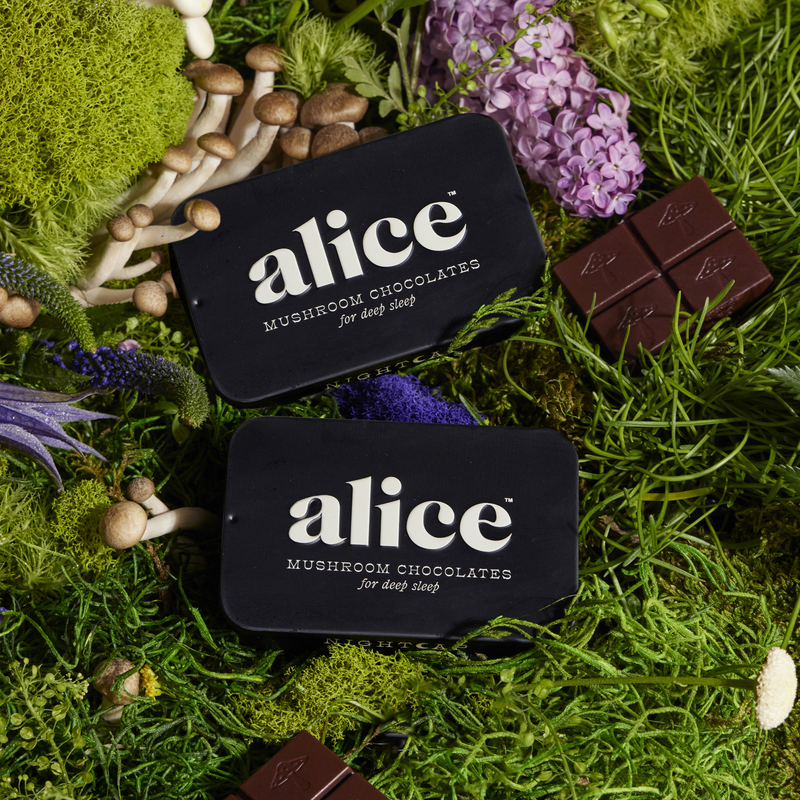
Nightcap


Nightcap
Select Quantity:
Choose Your Price:
Nightcap contains fairly traded organic dark chocolate, organic Reishi from 100% fruiting body mushrooms, chamomile, L-theanine, magnesium malate, and zinc citrate.
Vegan, gluten-free, dairy-free, and OU-D kosher certified.
Other ingredients: organic semi-sweet 72% dark chocolate (organic unsweetened chocolate, organic cane sugar, organic cocoa butter), coconut oil, cocoa butter
Allergens: Coconut, Soy
Processed on shared equipment and may contain peanuts, tree nuts, milk, eggs, or soy.
Nightcap is formulated with Reishi mushrooms to regulate sleep cycles and support stress levels, while also delivering an immediate feeling of nighttime relaxation from magnesium malate, l-theanine, zinc, and chamomile.
The real magic is in the long term benefits of the Reishi mushroom which, when taken regularly for about 3 weeks, can help manage stress levels and improve overall sleep cycles by down-regulating the nervous system.
Zinc and magnesium have been shown to increase the body’s levels of naturally circulating melatonin to regulate your circadian rhythm from within. Zinc has also been shown to quiet the mind after periods of mental stress.
Chamomile has long been used in calming nighttime rituals, while reishi's adaptogenic roots are linked to relaxation and overall balance. Together, they help set the stage for restful nights and refreshed mornings.
Magnesium is often associated with helping the body relax and ease into rest, while l-theanine is connected to a calm, balanced state by influencing mood-supportive neurotransmitters.
What to expect:
- In 30 minutes, fall asleep easier and sleep better
- In 30 days, notice restful sleep, sleep through the night, and experience a faster sleep onset
- After 3 months, enjoy healthy sleep cycles, increased sleep quality, and wake up rested
One square suits most.
Eat 1-2 squares of Nightcap an hour before bedtime to support sleep and relaxation. With nightly use, Nightcap will help to foster healthy sleep patterns and deeper sleep.
We exclusively use organic, fruiting body Reishi mushrooms that are hand-harvested when their medicinal compounds are at peak concentration. Our mushrooms are dried in the sun to soak up Vitamin D before undergoing a pure, starch-free extraction process.
All ingredients are third-party lab tested for safety and stability, and mushrooms are third-party lab tested for potency.