featured
Reishi: The Calm Mushroom
Still feeling “on” after the day ends? Reishi may support balanced stress signaling and nervous system support, so you can unwind without feeling sedated.

Reishi: The Calm Mushroom
We’ve learned to treat rest as something we earn.
Something reserved for after the mountain of work is finished, the inbox is cleared, and the day has taken its toll. We build elaborate routines in an attempt to reclaim a sense of control. We track it. We schedule it. And still, within hours, the stress is back.
Calm isn’t just a mood, it’s a biological response. One shaped by whether the nervous system can shift out of fight-or-flight. In a world constantly being overstimulated, that switch doesn’t come easily.
That is where reishi comes in.
What Reishi Actually Does
Scientifically known as Ganoderma lucidum, reishi is one of the most studied medicinal mushrooms. Researchers have identified hundreds of bioactive compounds in reishi, but two groups are especially well studied:
- Polysaccharides
- Triterpenoids
These compounds don't behave like stimulants or sedatives. Instead, they interact with signaling pathways and how cells communicate with one another.
A major area of ongoing research involves immune function. Rather than pushing the immune system into constant overdrive, reishi has been studied for its role in supporting balanced immune responses. Research studies suggest it may interact with components of the immune system involved in everyday immune surveillance, including certain white blood cells. These findings help researchers better understand how immune systems maintain normal function.*
In practical terms, this means the immune system does its job when it needs to, and stands down when it doesn’t. This distinction matters because an immune system that stays activated for too long can contribute to inflammation, fatigue, and stress on the body. This also applies to stress.

Why Reishi Is Described as “Calming”
When the body experiences stress, it activates the sympathetic nervous system, the branch responsible for alertness and action. This stress response evolved for survival, meant to turn on quickly and turn off just as fast. The problem now isn’t the stress itself. It’s how long we stay there.
A body experiencing stress from deadlines and constant notifications doesn’t turn off the moment the laptop closes. The workday ends, but the nervous system is still activated – heart rate elevated, muscles tense, the brain still searching for its next threat.
This is where Reishi can help. Reishi isn’t calming because it sedates the body or numbs out the mind. It supports the body’s ability to exit stress. Research suggests its compounds may help support healthy stress signaling and parasympathetic activity, which plays a role in rest, digestion, and recovery. Stress is less likely to linger into the evening, the body may settle more easily, and over time, that ability to recover begins to feel familiar again.
What The Studies Actually Show
Much of the human research on reishi has focused on individuals experiencing sustained physiological stress. In a large 2024 survey of more than 1,300 individuals using reishi products, many participants reported perceived improvements in areas such as fatigue, appetite, mood, and overall quality of life. Other studies have explored similar associations related to emotional well-being and daily functioning.
These findings don’t suggest that reishi treats disease. Rather, they suggest it may help support the body’s ability to cope more effectively during prolonged periods of stress.
Not everyone responded in the same way. Some participants reported no noticeable changes, and a small percentage experienced mild side effects. That variability matters, it reflects the fact that reishi is biologically active, and that its effects depend on individual physiology, consistency, and context.

Reishi, Day to Night
Reishi’s effects aren’t confined to a specific time of day. What makes it special is not how it makes you feel in a single moment, but how it supports the body across an entire day.
During the day, stress is often unavoidable. The nervous system stays engaged, responding to deadlines, conversations, decisions, and constant overstimulation from the internet. Reishi’s role here isn’t to slow the body down, but to support how stress is processed. Research suggests its compounds may support how stress signals are processed, contributing to a calmer internal baseline, even while remaining active and productive.
At night, when the body finally has time to unwind, recovery doesn’t always come with it. The day ends, but for many people, the nervous system doesn’t. Recovery doesn’t automatically follow rest, and the body remains partially in fight-or-flight.
Reishi supports the body’s ability to transition out of that state by influencing pathways involved in serotonin and melatonin precursors, as well as the neurotransmitters associated with relaxation. Rather than forcing sleep, it helps create the biological conditions that allow sleep to happen naturally. This is what makes reishi a great option for both day and night.
Reishi in Zen-X
Zen-X was created to help lessen the mental and emotional load of daily life. Moments when stress is present, but slowing down isn’t an option.
Reishi works alongside ingredients like L-theanine, rhodiola, saffron, kanna, tremella, and magnesium to support calm clarity rather than relaxation in the traditional sense. Reishi contributes by supporting balanced nervous system activity and healthy stress signaling. Research suggests it may help support healthy cortisol patterns, which can be influenced during periods of chronic stress.
When paired with rhodiola’s adaptogenic support and L-theanine’s ability to ease nervous system tension without drowsiness, this combination is often used to support a calmer, more consistent internal baseline throughout the day.
- Physical tension may feel easier to manage
- Productivity may feel steadier rather than forced or scattered
- Emotional responses may feel more balanced and proportional
Zen-X can be used during the day or early evening, whenever the nervous system needs support without signaling it to go to sleep.

Reishi in Nightcap
With Nightcap, our goal was to support the body as it unwinds from daily stress and prepares for rest. We paired reishi with chamomile, L-theanine, magnesium, and zinc. Ingredients known for their role in supporting GABA activity, melatonin production, and healthy circadian rhythms. Research has shown that reishi may influence pathways that keep your mind from racing and support a more relaxed state that makes it easier to settle into sleep.
Rather than taking a sleeping pill that forces unconsciousness and leaves the body feeling groggy the next day. Nightcaps effects support a natural sleep. Sleep that isn’t forced or shallow.
Over time, this can look like:
- Falling asleep feels easier
- Reduced nighttime restlessness
- More consistent, uninterrupted sleep cycles
Nightcap isn’t designed to knock you out, it’s designed to let sleep happen.
The body powering down at the end of the day isn’t the same as the body begging for recovery. True calm requires a nervous system shift, from hypervigilance to repair, from alert to feeling safe. Without that shift, even sleep can feel shallow and incomplete.

Where Rest Begins
Rest doesn’t begin when the to-do list is finished. It begins when the body stops asking what comes next. Modern life rarely makes space for that moment. Days blur and one demand folds into another. And the body keeps holding on, waiting for relief that never arrives.
Reishi isn’t felt all at once. It’s noticed later, when less of the day lingers. And that’s often where rest actually begins.
Disclaimer: This blog contains promotional content about our products. The information provided is for educational purposes only and is not intended to diagnose, treat, cure, or prevent any disease. These statements have not been evaluated by the Food and Drug Administration. This content is not a substitute for medical advice. Always consult your healthcare provider before making changes to your wellness routine, especially if you are pregnant, nursing, taking medication, or have a medical condition.
References:
- Cleveland Clinic. (2023). Natural Killer Cells. Retrieved from https://my.clevelandclinic.org/health/body/24898-natural-killer-cells
- Vice. (2025). Lion’s Mane, Reishi, Cordyceps: Are Mushroom Supplements Doing Anything or Just Vibes?. Retrieved from https://www.vice.com/en/article/functional-mushrooms-reishi-lions-mane-cordyseps/
- Healthline. (2025). 6 Benefits of Reishi Mushroom (Plus Side Effects and Dosage). Retrieved from https://www.healthline.com/nutrition/reishi-mushroom-benefits
- WebMD. (2024). What Does Fight, Flight, Freeze, Fawn Mean?. Retrieved from https://www.webmd.com/mental-health/what-does-fight-flight-freeze-fawn-mean
- Science Direct. (2024). Symptom improvements and adverse effects with Reishi mushroom use: A Cross-Sectional survey of cancer patients. Retrieved from https://www.sciencedirect.com/science/article/pii/S2213422024000696
- World Health Expo. (2021). Understanding the body’s fight-or-flight response. Retrieved from https://www.worldhealthexpo.com/insights/healthcare-management/understanding-the-body-s-fight-or-flight-response

By Kristen Carli, MS, RD
Kristen Carli is the owner of Camelback Nutrition & Wellness, a private nutrition practice and consulting firm. She graduated from University of Arizona with a BA in psychology and then received a BS in dietetics from Arizona State University. After completion of the dietetic internship, she continued her education by receiving a MS in Human Nutrition from University of Western States. Having a passion for nutrition communication, she writes for many food and nutrition outlets as well as regularly develops recipes for food brands and media companies. Her nutrition expertise has been featured in InStyle, Bustle, Livestrong, The List, MyFitnessPal and many others. Additionally, Kristen is often featured via local TV segments sharing nutrition tips and tricks. She was selected to act as a Produce for Better Health Foundation Fruit and Vegetable Ambassador in Action, helping to promote the health benefits and importance of consuming fruits and vegetables, as well as a FoodMinds upwaRD winner for 2022, honoring up and coming media dietitians. You can find her reading, running, and exploring new restaurants with her husband and baby boy.
save 15% with code alice15
Zen-X


to combat daily stress.

mushrooms
CHOCOLATE

per serving

1g of sugar

BASED
Zen-X
Select Quantity:
Choose Your Price:

*$10 surcharge on all orders to FL, TX, AZ, HI. $9.99 shipping on one-time orders.
final shipping cost shown at checkout.
Zen-X contains fairly traded organic dark chocolate, Reishi and Tremella from 100% fruiting body mushrooms, kanna, l-theanine, magnesium glycinate, rhodiola, and saffron.
Vegan, gluten-free, dairy-free, and OU-D kosher certified.
Other ingredients: organic semi-sweet 72% dark chocolate (organic unsweetened chocolate, organic cane sugar, organic cocoa butter), coconut oil, cocoa butter
Allergens: Coconut
Processed on shared equipment and may contain peanuts, tree nuts, milk, eggs, or soy.
Zen-X is a chocolate made to support calm clarity and inner balance through cortisol regulation. It's crafted with a calming ingredient blend of Reishi and Tremella mushrooms, l-theanine, kanna, rhodiola, saffron, and magnesium glycinate so that you can ease daily stressors without drowsiness. Together, these ingredients create a state of ease and focus that works seamlessly with both daytime productivity and nighttime wind-down.
Zen-X is formulated to activate your parasympathetic nervous system by targeting your cortisol levels, down-regulating your stress response, and releasing physical tension in the body. With naturally relaxing ingredients (but no drowsy effects), each bite is designed to lower stress, relax brains and body, and promote a cool, calm, and collected state of mind.
What to expect:
- In 30 minutes, feel a calmer mood and tension relief
- In 30 days, notice stress relief, mental clarity, and better mood
- After 3 months, enjoy cortisol regulation, high stress resilience, and nervous system balance
Enjoy 1-2 squares any time you need to recenter or calm your nerves. With daily use, Zen-X will continue to help stabilize your cortisol levels, ease physical tension, and improve your mood over time.
We exclusively use organic, fruiting body Reishi and Tremella mushrooms that are hand-harvested when their medicinal compounds are at peak concentration. Our mushrooms are dried in the sun to soak up Vitamin D before undergoing a pure, starch-free extraction process.
All ingredients are third-party lab tested for safety and stability, and mushrooms are third-party lab tested for potency.
mushrooms
CHOCOLATE
per serving
1g of sugar
BASED

Nightcap







Nightcap
Select Quantity:
Choose Your Price:
*$10 surcharge on all orders to FL, TX, AZ, HI. $9.99 shipping on one-time orders.
final shipping cost shown at checkout.
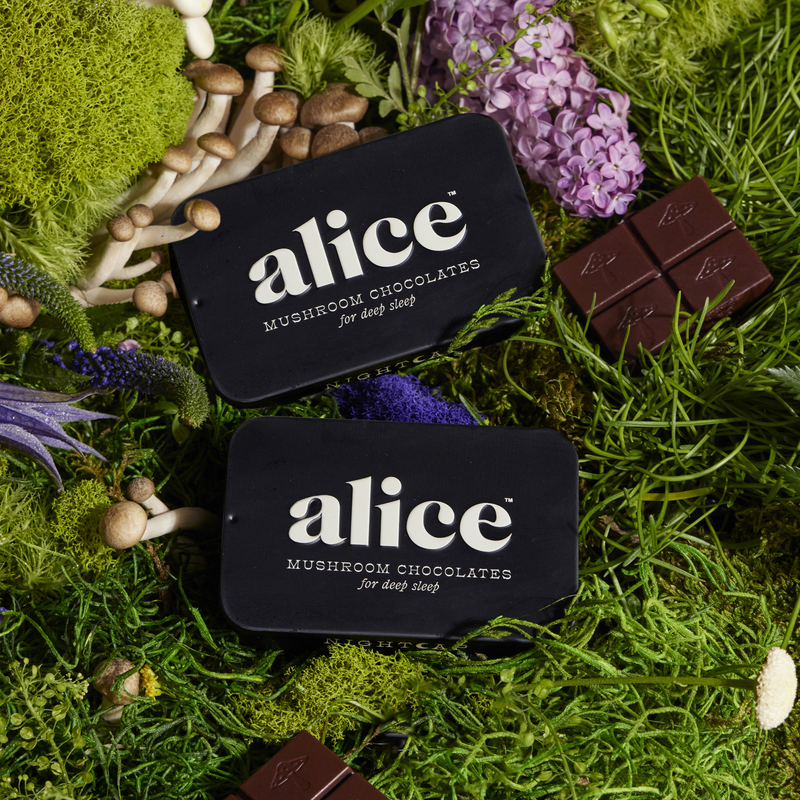
Nightcap contains fairly traded organic dark chocolate, organic Reishi from 100% fruiting body mushrooms, chamomile, L-theanine, magnesium malate, and zinc citrate.
Vegan, gluten-free, dairy-free, and OU-D kosher certified.
Other ingredients: organic semi-sweet 72% dark chocolate (organic unsweetened chocolate, organic cane sugar, organic cocoa butter), coconut oil, cocoa butter
Allergens: Coconut, Soy
Processed on shared equipment and may contain peanuts, tree nuts, milk, eggs, or soy.
Nightcap is formulated with Reishi mushrooms to regulate sleep cycles and support stress levels, while also delivering an immediate feeling of nighttime relaxation from magnesium malate, l-theanine, zinc, and chamomile.
The real magic is in the long term benefits of the Reishi mushroom which, when taken regularly for about 3 weeks, can help manage stress levels and improve overall sleep cycles by down-regulating the nervous system.
Zinc and magnesium have been shown to increase the body’s levels of naturally circulating melatonin to regulate your circadian rhythm from within. Zinc has also been shown to quiet the mind after periods of mental stress.
Chamomile has long been used in calming nighttime rituals, while reishi's adaptogenic roots are linked to relaxation and overall balance. Together, they help set the stage for restful nights and refreshed mornings.
Magnesium is often associated with helping the body relax and ease into rest, while l-theanine is connected to a calm, balanced state by influencing mood-supportive neurotransmitters.
What to expect:
- In 30 minutes, fall asleep easier and sleep better
- In 30 days, notice restful sleep, sleep through the night, and experience a faster sleep onset
- After 3 months, enjoy healthy sleep cycles, increased sleep quality, and wake up rested
One square suits most.
Eat 1-2 squares of Nightcap an hour before bedtime to support sleep and relaxation. With nightly use, Nightcap will help to foster healthy sleep patterns and deeper sleep.
We exclusively use organic, fruiting body Reishi mushrooms that are hand-harvested when their medicinal compounds are at peak concentration. Our mushrooms are dried in the sun to soak up Vitamin D before undergoing a pure, starch-free extraction process.
All ingredients are third-party lab tested for safety and stability, and mushrooms are third-party lab tested for potency.